Mapping Multiple LSTM Models on FPGAs
Published:
A framework that co-optimises multiple LSTM models for FPGA deployment via SVD-based approximation and structured pruning, reaching 3x to 5x speedups at equal accuracy loss.

Published:
A framework that co-optimises multiple LSTM models for FPGA deployment via SVD-based approximation and structured pruning, reaching 3x to 5x speedups at equal accuracy loss.
Published:
Implementing sequence alignment, domain assignment, main chain tracing, and steric overlaps detection.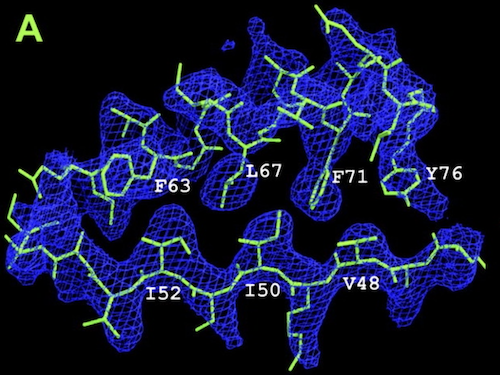
Published:
MATLAB projects on SIFT, CNNs, image registration, and triangulation.
Published:
A series of assignments on OpenMP, Threads, and OpenCL.
Published:
Implementing the FEM algorithm from scratch in Numba and CuPy.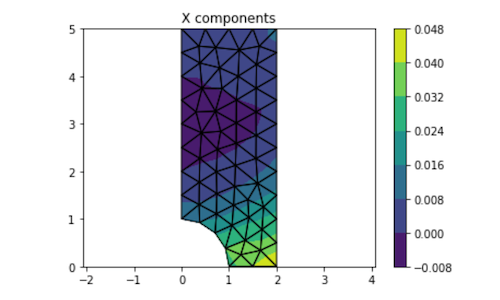
Published:
An open, reproducible degradation activity model that outperforms DeepPROTACs at a fraction of the complexity, trained on a curated PROTAC-DB / PROTAC-Pedia dataset.
Published:
Automated decomposition of a PROTAC into E3 ligand, linker and warhead, via a Transformer sequence-to-sequence model and a graph-based XGBoost model.
Published:
3,514 PROTACs and 6,561 degradation endpoints in one standardised dataset, plus the statistical benchmark code used to evaluate degradation activity models.
A framework that co-optimises multiple LSTM models for FPGA deployment via SVD-based approximation and structured pruning, reaching 3× to 5× speedups at equal accuracy loss.
An open-source, reproducible deep learning model for predicting PROTAC-induced degradation activity, together with a curated dataset built from PROTAC-DB and PROTAC-Pedia.
An open-source machine learning framework that automatically decomposes a PROTAC into its three functional parts — E3 ligand, linker and POI warhead — together with a synthetic dataset of ~1.3M annotated PROTAC structures.
TACK aggregates 3,514 PROTACs and 6,561 degradation endpoints into the largest public PROTAC activity dataset, and uses it to run a rigorous statistical comparison of degradation-activity models.
Ranxuan Zhang — learning to split a PROTAC into its E3 ligand, linker and warhead, and using that decomposition to improve degradation activity prediction.
Alexander Persson and Felix Erngård — generative design of complete PROTACs using language models with reinforcement learning, optimised against several objectives at once.
Tingting Mo and Jia Xin Zhu — a systematic framework for PROTAC synthesizability assessment, combining PROTAC-Splitter decomposition with AiZynthFinder-based retrosynthesis scoring.