
Sitemap
A list of all the posts and pages found on the site. For you robots out there is an XML version available for digesting as well.
Pages
Posts
(My way of) Running Jobs on Alvis
Published:
This post describes how to run jobs on Alvis, the HPC cluster at Chalmers University of Technology, and how to run a Jupyter Notebooks from a container.
Drawing for Publications
Published:
This blogpost provides guidelines and best practices for creating figures, diagrams, and plots for scientific papers, particularly in the context of cheminformatics and related fields.
portfolio
Mapping Multiple LSTM Models on FPGAs
Published:
A framework that co-optimises multiple LSTM models for FPGA deployment via SVD-based approximation and structured pruning, reaching 3x to 5x speedups at equal accuracy loss.
Bioinformatics Course
Published:
Implementing sequence alignment, domain assignment, main chain tracing, and steric overlaps detection.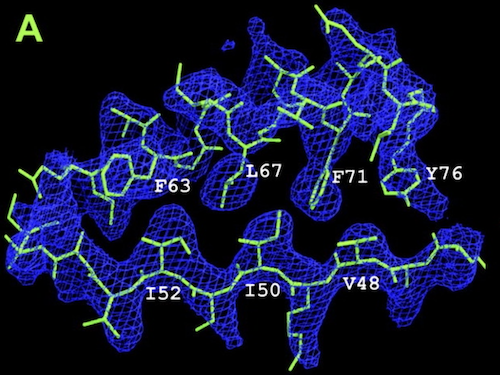
Image Analysis Course
Published:
MATLAB projects on SIFT, CNNs, image registration, and triangulation.
High Performance Computing Course
Published:
A series of assignments on OpenMP, Threads, and OpenCL.
Finite Element Method (FEM) using Python and CUDA
Published:
Implementing the FEM algorithm from scratch in Numba and CuPy.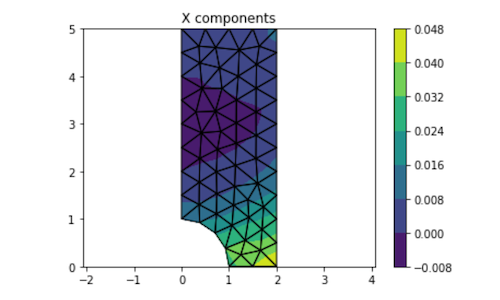
PROTAC-Degradation-Predictor
Published:
An open, reproducible degradation activity model that outperforms DeepPROTACs at a fraction of the complexity, trained on a curated PROTAC-DB / PROTAC-Pedia dataset.
PROTAC-Splitter
Published:
Automated decomposition of a PROTAC into E3 ligand, linker and warhead, via a Transformer sequence-to-sequence model and a graph-based XGBoost model.
TACK: A Novel TArgeting Chimeras Knowledge Dataset
Published:
3,514 PROTACs and 6,561 degradation endpoints in one standardised dataset, plus the statistical benchmark code used to evaluate degradation activity models.
projects
publications
Mapping Multiple LSTM Models on FPGAs
A framework that co-optimises multiple LSTM models for FPGA deployment via SVD-based approximation and structured pruning, reaching 3× to 5× speedups at equal accuracy loss.
Modeling PROTAC Degradation Activity with Machine Learning
An open-source, reproducible deep learning model for predicting PROTAC-induced degradation activity, together with a curated dataset built from PROTAC-DB and PROTAC-Pedia.
PROTAC-Splitter: A Machine Learning Framework for Automated Identification of PROTAC Substructures
An open-source machine learning framework that automatically decomposes a PROTAC into its three functional parts — E3 ligand, linker and POI warhead — together with a synthetic dataset of ~1.3M annotated PROTAC structures.
TACK: A Statistical Evaluation of Degradation Activity on a Novel TArgeting Chimeras Knowledge Dataset
TACK aggregates 3,514 PROTACs and 6,561 degradation endpoints into the largest public PROTAC activity dataset, and uses it to run a rigorous statistical comparison of degradation-activity models.
teaching
Machine Learning for PROTAC Decomposition and Enhanced Degradation Prediction
Ranxuan Zhang — learning to split a PROTAC into its E3 ligand, linker and warhead, and using that decomposition to improve degradation activity prediction.
Reinforcement Learning with Language Models for Multi-Objective PROTAC Optimization
Alexander Persson and Felix Erngård — generative design of complete PROTACs using language models with reinforcement learning, optimised against several objectives at once.
Improving AI-based Synthesizability Scores for Next-Generation Protein Degradation Drugs
Tingting Mo and Jia Xin Zhu — a systematic framework for PROTAC synthesizability assessment, combining PROTAC-Splitter decomposition with AiZynthFinder-based retrosynthesis scoring.